
The Audience Almanac: A Seasonal Framework for Intentional Engagement
Most news publishers don’t struggle from a lack of good ideas about audience engagement. They struggle from a lack of focus. The Audience Almanac is a seasonal framework that gives community-first publishers a practical structure for doing the right audience work at the right time. Modeled on a farmer’s almanac, the four phases — Define, Listen, Build, and Sustain — map to a repeating cycle that deepens with every pass. Whether you’re just starting out or rebuilding your strategy, this framework tells you what season you’re in — and what to do about it.
A note of gratitude: This framework builds on a growing body of community-first practice, including work by Hearken, the Listening Post Collective and Trusting News — organizations whose thinking on listening and audience-first journalism has shaped this field.
When I moved from the newsroom into ecosystem work, I was coming from having built something from the ground up — with intention.
At The 19th, Emily Ramshaw and I and our founding team had the privilege of naming an audience before we published a single story. We could ask: who, exactly, are we here for? What do they need from us that they can’t get anywhere else? And we could build every decision — editorial, product and revenue — from that foundation.
That experience of building audience-first, intentionally, from day one, underscored something I’ve carried into every consulting engagement since: our internal processes and systems shape the end results for our readers and communities far more than we acknowledge. You can’t separate how you work from who you serve.
When I transitioned into consulting — working across the news ecosystem with publishers with various missions, sizes and models — this theme of alignment emerged again and again. The publishers building audience-first solutions successfully were also taking the time to get their internal systems in shape.
The work feels massive. Where to start?
A growing number of publishers want to center their audiences with greater intention. They know it matters. They’ve heard the research, attended the trainings, crafted the mission statements.
But the work feels massive — and so they try to do everything at once. They broadcast and listen and build community and analyze metrics and plan campaigns all in the same week, never going deep enough in any direction to see results. They feel behind before they’ve started.
What I’ve observed, across publishers large and small, well-resourced and scrappy, is that audience development doesn’t suffer from a shortage of good ideas. It suffers from a shortage of focus.
This framework is my attempt to give publishers permission — and a practical structure — to tackle this work in stretches of focus that are far more doable, and far more impactful.
Enter, the almanac.
An almanac is a farmer’s planning guide — a calendar rooted in natural cycles, built on the understanding that different seasons call for different kinds of work. You don’t plant in winter. You don’t rest in harvest. Each phase has a purpose, and rushing any one of them costs you later.
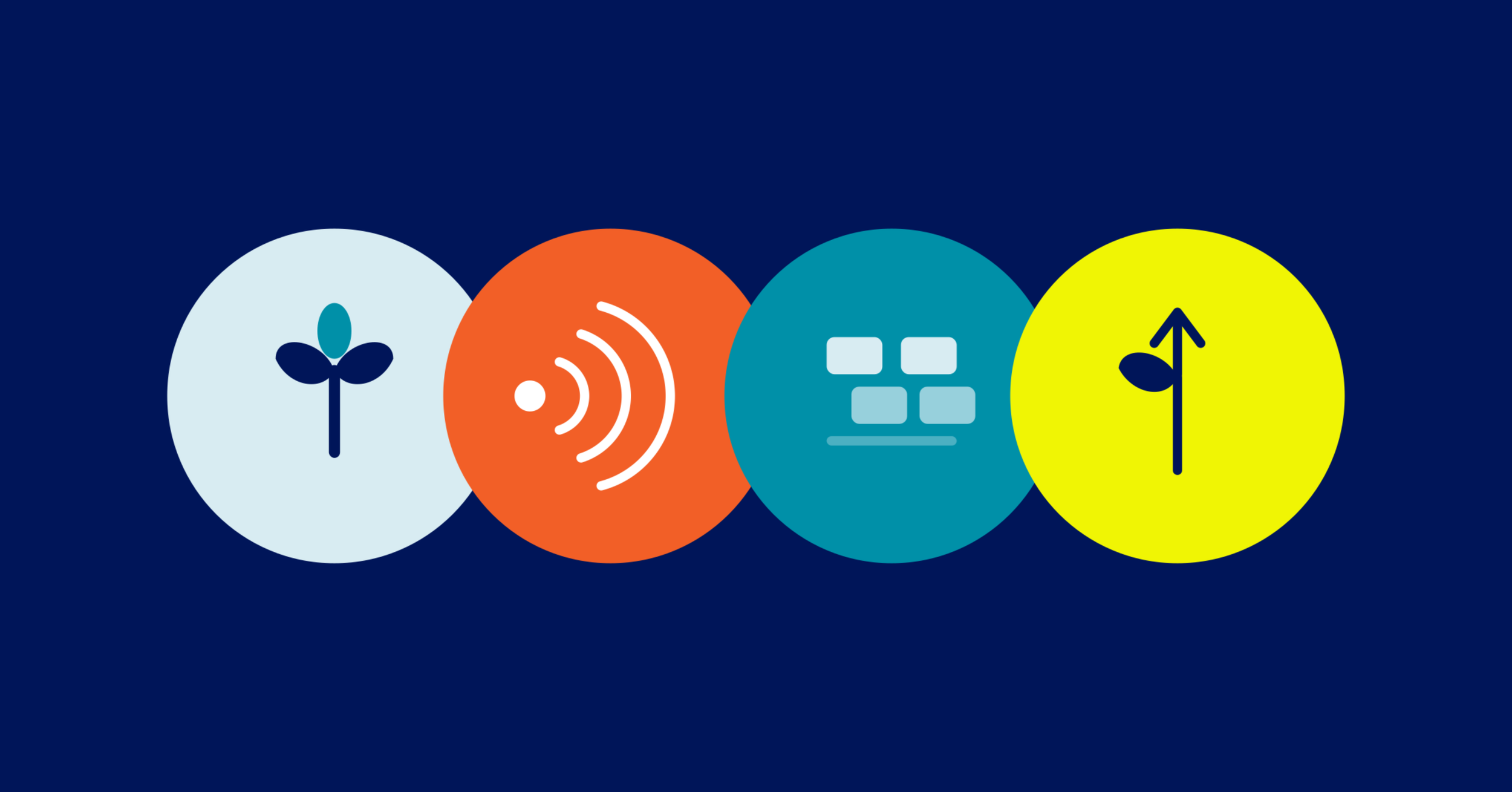
Audience engagement works the same way. The four seasons of this framework map to four essential phases:
Spring: Define. Summer: Listen. Autumn: Build. Winter: Sustain.
These aren’t sequential steps you complete once. They’re a cycle — one that repeats and deepens with each pass. The goal isn’t to finish the cycle. It’s to know which season you’re in, and to do that season’s work well.
🌱 Spring: Define (Planting the seeds)
The almanac analogy: Farmers don’t plant without knowing their soil and climate. They select seeds intentionally, for their specific conditions.
The Define phase is about getting specific. Not just “we serve our community” but: which community members, what they need, and why your outlet is positioned to serve them better than anyone else.
Publishers who skip this phase — who jump straight to content production or community-building — often find themselves months down the road wondering why their engagement isn’t growing. The answer is almost always rooted here: the audience was never clearly named.
Key activities in Spring:
Define your target audience with specificity — demographics, lived experience and information needs, and what they’re NOT getting elsewhere.
Set clear engagement goals. What does success look like in six months? In a year?
Establish your KPIs — but choose metrics that reflect civic impact, not just reach. Open rates and pageviews matter, but so do community trust signals.
Develop a communication strategy: what channels, what voice, what cadence?
Key question: If you described your most important reader to a colleague, could they pick her out of a crowd?
☀️ Summer: Listen (Tending the crops)
The almanac analogy: Summer is active tending — monitoring, watering, protecting. Farmers don’t plant and walk away. They pay close attention.
The Listen phase is about building real feedback loops — not just monitoring metrics, but hearing from your audience directly. This is where a lot of publishers underinvest. They track traffic but don’t ask readers what’s missing. They watch open rates but never text a subscriber to ask what story they wish existed.
Some of the most effective listening practices I’ve seen are also the simplest. The 19th asks every new subscriber: How did you hear about us? What stories are missing from the news? Those answers offer insights in ways an analytics dashboard simply can’t.
Key activities in Summer:
Monitor social media for what your audience says about your coverage — not just engagement metrics, but sentiment and gaps.
Analyze website behavior with curiosity, not just performance pressure. What are readers looking for that they’re not finding?
Run short surveys or reader polls — even a single question sent monthly builds a habit of feedback.
Show up in the spaces where your audience already gathers: WhatsApp groups, community events, local Facebook groups.
Read your support tickets, your reply-to emails, your DMs. These are reader dispatches. Treat them as such.
Key question: When did you last hear something from a reader that surprised you?
🍂 Autumn: Build (The harvest)
The almanac analogy: Autumn is the harvest — the fruits of intentional planting and careful tending. The work here is collecting, sharing and distributing.
The Build phase is where publishers often spend most of their energy — creating content, responding to readers, running events — but without the grounding of Spring and Summer, they're building about their audience, not with them.
When you've done the Define and Listen work first, that changes. You're not guessing at what your audience needs. You're building from what they've already told you.
Key activities in Autumn:
Create content that is directly responsive to what you heard in Summer — and tell your readers that’s what you’re doing. Closing the loop builds trust.
Respond to audience feedback visibly and specifically. Not just “thanks for your input” but “you told us X, so we did Y.”
Build community infrastructure: newsletters, events, WhatsApp channels and membership programs — whatever fits your model and your audience’s habits.
Invest in your customer service and reader experience. The way someone feels when they reach out to you shapes whether they stay.
Key question: Are you building about your audience, or with them?
❄️ Winter: Sustain (Rest and prepare)
The almanac analogy: Winter is for resting, analyzing the harvest and maintaining tools, and planning the next planting season. It’s strategic — not idle.
This is the phase most publishers skip, or feel guilty about. But Winter is what makes the next cycle better. It’s where you step back from execution and ask: what did we learn?
I’ve seen publishers run excellent audience-building programs and then immediately pivot to the next campaign without pausing to analyze what worked, what didn’t, and why. That institutional knowledge evaporates. The next cycle starts from scratch instead of from strength.
Key activities in Winter:
Audit your engagement metrics from the past cycle — not just what performed, but what it signals about your audience’s evolving needs.
Update your audience definition and your KPIs based on what you learned. Your audience is not static; your understanding of them shouldn’t be either.
Maintain relationships with key community members even when you’re not in active campaign mode. Sustain, don’t just sprint.
Evaluate your tools and platforms. Is your tech stack serving your audience strategy, or constraining it?
Draft your roadmap for the next cycle. Spring comes whether you’re ready or not.
Key question: What would you do differently next cycle — and have you actually written it down?

What season is your newsroom in right now?
Before you start planning your next audience initiative, take five minutes with these questions:
On Define: Can you describe your primary audience in two specific sentences — not in mission statement terms, but as actual people who have problems to solve?
On Listen: In the past 30 days, have you received direct, qualitative feedback from readers — not traffic data, but actual voices?
On Build: Is your most recent content initiative directly traceable to something your audience told you they needed?
On Sustain: When did you last formally review your audience strategy and update it based on what you’ve learned?
The big one: Which phase are you currently neglecting — and what’s one thing you could do this week to tend to it?
There are no wrong answers here. The goal is clarity about where you are in the cycle — so you can do that season’s work with focus, instead of trying to do every season at once.
One more thing.
The almanac isn’t a prescription. It’s a permission structure.
Permission to stop trying to be everything to everyone, all at once. Permission to go deep in one direction before moving to the next. Permission to rest and reflect without feeling like you’re falling behind.
The publishers I’ve seen build the most durable audience relationships aren’t the ones with the biggest budgets or the most sophisticated tech stacks. They’re the ones who know their audience with specificity, listen to them consistently, build in genuine response to what they hear, and return to the beginning of the cycle, curious about what they still don’t know.
The almanac is a place to start. What season are you in?
—
This framework is featured in the April edition of the Audience Almanac newsletter. Subscribe at thisisagencia.com/newsletter.