
What newsrooms can learn from Telemundo and Mamdani about engaging bilingual audiences
This summer, Telemundo’s 2026 World Cup coverage became the most-watched FIFA World Cup tournament in Spanish-language media history, averaging 6.3 million total viewers across all 104 matches. And the appeal wasn’t limited to Spanish speakers: the energy, pacing and sense of occasion were strong enough to pull in viewers who may not have caught every word, but knew to stay locked in when the commentary started getting faster before hitting that infectious “¡GOOOOOOOOOOOL!”
That same lesson is showing up in politics. More candidates and city governments are investing in direct Spanish-language outreach this election cycle, from bilingual field operations to WhatsApp channels and Spanish-first social accounts designed to meet Latinos where they actually speak and share information.
So how are news organizations reaching this growing audience, especially at a time when Latinos are driving a critical voting bloc?
This edition of Audience Almanac looks at what local newsrooms can do to better engage Spanish-language audiences, and why it matters.
Treat Spanish as a core product line
For many years, newsrooms could get away with treating Spanish coverage as "take this existing product and translate it." Not anymore. A strong bilingual strategy starts with actually knowing your audience — their habits, their culture, how they consume news — not retrofitting what already exists. And this is where soccer ties into local news.
Telemundo's World Cup coverage is the standard for Spanish-speaking audiences. It's what you picture when you think of watching a soccer match: Andrés Cantor's commentary, the chants from fans in perfect sync, the excitement that doesn't dip even during a break in play. And that's the thing: this wasn't a special World Cup production. It's the same experience Telemundo has been delivering for decades, through local league matches on Sundays and Champions League games during the week, long before the rest of the U.S. was watching.
English-speaking viewers weren't getting a translated broadcast this summer; they were getting into a sporting culture that had been running in Spanish the whole time. That's also how Telemundo handled the tournament's most-hated new rule, the 3-minute hydration break. Fox Sports used it to run ads. Telemundo got Coca-Cola to sponsor the break instead, so cameras stayed on players and coaches — arguments, sideline tension, all of it — and the match never lost its pulse.
That authenticity paid off: Nielsen ratings show 20% of Telemundo's World Cup viewers primarily speak English, and Miguel Lorenzo, senior vice president of Telemundo Deportes, says telecast viewership jumped 122% since the 2022 World Cup. “I can't tell you how many comments I've seen where people are saying, ‘I don't speak a lick of Spanish, but I want to watch it on Telemundo because it just sounds more exciting,’” Lorenzo says. "Joy and excitement and drama: it's language agnostic, it's universal.”
Telemundo didn't chase a bigger audience by changing what it does. It just kept doing it well, and the audience found it. That's the cue for local newsrooms: there's no template for authenticity. Know your community, learn from them, and lead the way that actually reflects who they are. That's the only strategy that can't be copied.
Build bilingual routes, not bilingual moments
Campaigns have also learned that a Spanish-language message only works when it is part of a broader system: field scripts, text messages, call banks, signage, social and earned media all working together. That’s the lesson for newsrooms: a story can’t begin and end with translation. It needs a bilingual route from reporting to distribution: an English story, a Spanish explainer, a social version tailored to bilingual users, and distribution through the channels Spanish-speaking audiences already trust.
New York City offers a useful example. Mayor Zohran Mamdani’s new “El Chisme Oficial de NYC” WhatsApp channel and relaunch of the city’s Spanish-language Instagram account are built to reach residents directly with city news, service updates, immigration information, transit alerts and community resources in a tone that feels conversational (even calling channel members “chismosos y chismosas”) rather than institutional. That matters because the language is not just translated; it is culturally adaptive. The city is meeting Spanish-speaking residents where they already spend time and speaking in a voice that feels authentic to them.
Newsrooms can apply the same lesson to elections, emergencies and other high-tempo moments. Spanish-language updates should move in parallel with English, not days later. The goal should be to create two connected paths into the same story.
Localize by community, not just language
Depending on where you are, Spanish can be different.Pew's data shows 54% of U.S. Latinos get news mostly in English, 21% mostly in Spanish, and 23% in both equally — but even within that 21%, “Spanish” isn't one audience. A Puerto Rican reader in New York and a Mexican reader in Texas may use the same word for two different things (tostada means a slice of toast in San Juan and a fried tortilla in Mexico City) and a “neutral,” textbook-correct Spanish can read as accurate but still feel like it's talking past someone.
Spectrum Noticias is a useful case study for what it looks like to get this right. Rather than build a single national Spanish-language feed, the network opened local bureaus in Los Angeles, New York, Texas, and Florida and staffed them with reporters embedded in those communities.
Local newsrooms don't need a national network's budget to apply the same logic. Before building a Spanish-language strategy, learn who your Spanish speakers actually are: where their families are from, what dialect and slang show up in your comment sections, which local issues matter to them. Often, that knowledge is already sitting in your own newsroom. Spanish-speaking editors and reporters are the fastest, most direct line to that understanding — not just as translators, but as the people who can tell you what's actually resonating and what's falling flat. Listen to them and let them shape the strategy, not just execute it. A generic Spanish translation can technically inform a community. Only a newsroom that knows its own market's Spanish speakers can actually earn their trust.
Be an ecosystem player
Campaigns and city agencies already reach Spanish-speaking residents through hotlines, WhatsApp channels, community groups and trusted messengers. A local newsroom's job isn't to replicate that outreach, but to become the place people turn for context, verification, and plain-language explainers on ballots, candidates, schools, immigration, transit and emergencies.
If your newsroom doesn't have the strategy or in-house experience to serve Spanish-speaking audiences yet, take this as an opportunity to team up with partners who do!
Plug into the civic ecosystem that already exists. Co-produce voter guides or town halls with community organizations. Partner with Spanish-language radio stations, local nonprofits, or outlets that already serve this audience well. El Tímpano hasbuilt civic partnerships that connect Spanish-speaking and Indigenous immigrant audiences in the Bay Area directly to resources and public information. In Montgomery County, Maryland, local government and media partners have usedSpanish-language radio to share essential community information and open a channel for questions. Neither required a newsroom to build strategy from scratch, but finding the right partner already doing the work.
Partnering well, and knowing when someone else in the ecosystem is better positioned to reach a community, is its own form of good journalism.
The Audit
If you’re a newsroom leader serving Latino audiences, ask yourself and your team:
Are Spanish-language stories planned from the start, or translated later?
Do Spanish-speaking editors have authority over coverage and distribution?
Are bilingual channels part of a workflow, or just occasional campaigns?
Are you localizing for specific communities, or using one generic Spanish for everyone?
Is your Spanish-language work part of civic life, or limited to election-season bursts?
You don’t need to have all the answers today, but these questions are a good place to begin prioritizing Spanish-speaking audiences.The bilingual turn in sports and politics this year suggests something newsrooms should find encouraging, not intimidating: audiences respond when language feels authentic, local and operationally serious — a bar any newsroom can clear with intention and a plan.
Voter Guides Answer Who. They Don't Answer How.
How Votebeat, Louisville Public Media and LAist are turning precinct changes, voter roll purges and signature rules into a proactive beat — not a post-crisis scramble.
On primary night in March, U.S. Rep. Jasmine Crockett stood in front of supporters in Dallas and told them the election wouldn’t be decided that night: confusion over new precinct‑based rules and a late court fight had thrown Dallas County’s results into doubt.
Months earlier, county officials had moved away from the countywide Election Day system voters had grown used to and shifted to precinct‑only voting, a change that was reported in January but still left hundreds of people (disproportionately voters of color) arriving at familiar polling places only to be turned away or redirected. Because of this, a judge ordered polls to stay open later; the Texas Supreme Court quickly scaled that back and required ballots cast after regular hours to be separated, leaving an unknown number of votes hanging in the balance while lawyers argued over which would count.
By the time those voters were standing at the wrong site, it was already too late for one more explainer or Election Day story to fix the problem. As local media looks to November, it isn’t enough to publish a voter guide and a single article about rule changes months in advance.
Truly serving communities means treating changes to voting policies as a proactive beat, making sure “how to vote” and “where to vote” get as much attention as “who’s on the ballot.”
Why voter guides aren’t enough
Most election coverage falls into one of two buckets. The first is horse-race coverage: who's up, who's down, what the latest poll says about a primary that's still months out. It's coverage built around the contest, not the voter.
The second is the voter guide — the genre most newsrooms consider their civic-duty coverage. Candidate bios, issue questionnaires, sometimes endorsements, published in the final weeks before an election. It's useful, but backward-looking at the rules of the election. It assumes the machinery (where you vote, whether your registration is intact, whether your mail ballot signature will clear) is fixed and working. It answers "who should I vote for" without ever asking "will my vote count."
Chris Piper, Virginia's former chief elections official, put it plainly to NPR this spring, describing a redistricting fight that scrambled congressional maps mid-primary across several states: "The biggest impact on voters is confusion. 'Where do I go vote? Who is even my elected representative? Or, which district am I even in?'... There's the potential for them to not know who they're voting for."
Many election offices are underfunded and reactive; they implement changes as best they can, but they’re not built to communicate every shift to every voter. In many cases, there’s no strong legal requirement to proactively notify people when their precinct moves or when new verification rules kick in. The burden of discovery falls on voters, watchdogs, and, of course, local media.
That’s why a third, more recent, coverage model looks at the unanswered questions. Newsrooms and community organizations are starting to proactively track changes to election administration: precinct reassignments, voter roll maintenance, signature verification, citizenship-check databases, redistricting fallout, and surfacing them before they cause the kind of chaos Dallas saw in March. The methods it follows can be divided into two.
Method one: Monitor changes before the crisis
Election systems change periodically and voters should be aware of them before casting their ballot. The best examples of this genre treat election administration as an ongoing beat and not a once-every-four-years event.
For example: Votebeat — a nonpartisan nonprofit newsroom built entirely around this beat — has teamed up with the Texas Tribune and ProPublica to show how tools like the federal SAVE database and related state data checks routinely mislabel citizens as “potential noncitizens” and drive quiet voter‑roll purges. If you knew your right to vote has been compromised, you’d want to fix that as soon as possible.
Build your own dataset. When Louisville Public Media reporters Justin Hicks and Roberto Roldan heard from a single persistent voter that she'd been assigned to the wrong precinct, they pulled a public database of roughly 450,000 addresses and wrote a program to check each one against the county's own "Where Do I Vote?" tool — and found 1,800 households with mismatched precinct data, including a state House race decided by five votes where five wrongly-registered voters had been turned away. As Roldan put it: "disenfranchising one person through these data errors has to be fixed."
Be present at the statehouse and the board meeting. Nonprofit state newsrooms — Georgia Recorder, Florida Phoenix, Tennessee Lookout, NC Newsline — have made a habit of sitting in on election board meetings and legislative sessions and reporting rule changes as they're made, not after they've caused a mess. Tennessee's decision to eliminate the requirement that counties notify voters when their precinct changes only became a story because a reporter was in the room when it happened.
Let the tip come from the ground. Sometimes monitoring starts with one voter's Facebook post. That's what happened in Louisville, and it's what happened in Dallas, where a voter who'd walked 2½ miles to her usual polling place became the anchor of Votebeat and Dallas Free Press's reporting on the precinct confusion.
“A lack of local reporting means that individuals do not have easy access to information about the specific voting procedures in their communities or in-depth coverage of local candidates, propositions, and policies. Election procedures can differ significantly state-to-state, and local reporting is vital for people to understand procedures where they live.” - Brennan Center report
Method two: Make sure your community knows what’s happening
You’ve outlined the problem. That’s only the first half. The second half, that’s completely skipped from the traditional voter guides, is getting the information to people before Election Day.
Publish the explainer before the confusion, not after. LAist ran a piece walking through exactly how L.A. and Orange County verify mail ballot signatures, what gets a ballot flagged, and how a voter "cures" a rejected one — timed ahead of California's June primary. It's service journalism, but aimed at the process rather than the candidates.
Build the infrastructure once, let many outlets use it. American Community Media convenes live news briefings that “bring community and ethnic media together with experts, officials, nonprofit leaders, and advocates” on topics like voting rights and voter ID, so outlets serving immigrant and non‑English‑speaking communities can localize and translate the same rule changes for their own audiences.
Meet people where the information already lives. The nonpartisan Election Protection Hotline (866-OUR-VOTE) exists because a press release or a news story published once isn't enough. Reporting on the issue will bring, hopefully, bring fixes later down the road. Voters need to find solutions as soon as they find something is wrong.
Make the most essential voting information accessible. If stories about precinct changes, purges, or verification rules sit behind paywalls, or are available only in one language, while campaign coverage is free, the voters most affected by those changes may never see or understand them. Treat “how and whether you can vote” as the coverage that must be easy to find, share, and reuse — even if other election reporting is subscription‑only.
Sometimes the response isn’t a byline. When Rev. Lelious Johnson realized voters walking to his South Dallas church were being turned away for the wrong primary, he arranged a bus to get them to the correct polling place. It's not journalism, but it's the same instinct: someone noticed the gap between what the system assumed and what voters actually needed, and closed it.
“In communities facing language barriers and uneven internet access, relying on news coverage alone guarantees that many eligible voters won’t see or understand the rules; that’s why long‑term organizing through trusted local institutions is more effective than any single story.” - Aspen Institute
—
These models don’t replace voter guides; they augment them. One explains the choices on the ballot. The other proactively helps people recognize precinct changes, verification rules and roll maintenance so they know how to vote and can trust their ballot will count.
Most voters don’t even know they should be asking those questions, which is why local media has to raise them early and often.
The newsrooms doing this well aren't waiting for the midterms to find out what’s broken. They've already been on the beat and their communities know it.

Size Your Audience Like You Mean It
Growing an audience from scratch is one of the most exciting and challenging things a publisher can do. And one of the first things we figured out building The 19th was that the hardest questions isn't actually 'what should we cover?' It's 'who, exactly, are we for?’
Without clarity around that, everything downstream — growth targets, funder conversations, product decisions — gets harder.
Many publishers do have an answer to the "who is your audience" question — it just tends to be a traffic number. Monthly uniques. Email subscribers. Social followers. Those metrics tell you how many showed up, not whether the people showing up are the ones you're actually trying to reach. The gap between those two things is where a lot of growth strategies quietly break down.
The publishers I work with who have the most clarity are the ones who stopped chasing reach and started defining it: a specific audience, in a specific place, that they can measure and grow toward over time.
That discipline does two things at once. It grounds your growth story in something real — not viral spikes, but sustained progress toward a defined community. And it gives funders, sponsors and donors a denominator: a number that lets them evaluate how effectively you're reaching the people you say you serve.
This post gives you a framework for building that denominator — and a concrete example of how the math works.
Using TAM to size your audience
TAM stands for Total Addressable Market. In its original form it doesn't translate well to mission-driven publishing — you're not trying to capture a market, you're trying to serve a community.
Adapted for publishers, it becomes a defensible estimate of how many people exist in the world you say you serve, grounded in data you can source and assumptions you can defend.
The base formula is simple:
One primary segment × one primary geography × one measurable proxy = a TAM you can stand behind
A perfect number isn't the point. The discipline of arriving at it is.
The piece most publishers skip: the proxy
When what you care about isn't directly measurable — "people invested in civic life," "Spanish-speaking families who want local accountability journalism" — you need a proxy: a measurable indicator that's directionally aligned with your mission.
Good proxies for community-first publishers might look like:
Voter turnout rates (for civic/accountability journalism)
Bilingual household data from the U.S. Census (for language-specific outlets)
Broadband access rates (for digital-first outlets in underserved geographies)
School enrollment or poverty rate data (for outlets focused on education or economic mobility)
The proxy is what turns "we serve engaged residents" into a number — and a number into a growth target.
Mapping TAM to your audience funnel
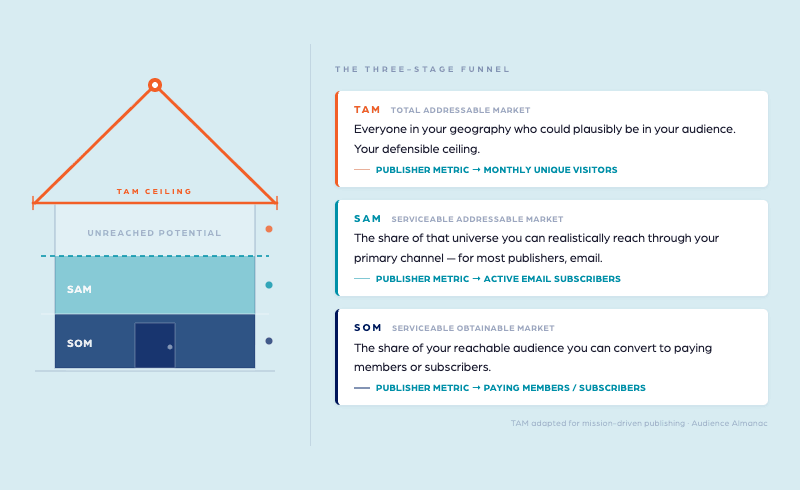
The framework doesn't stop at TAM. Think of it as three nested estimates — each one bringing you closer to a realistic audience target:
TAM (Total Addressable) is the universe: everyone in your geography who could plausibly be in your audience. Your defensible ceiling. In the calculator, this maps to monthly unique visitors — the broadest measure of who's in the world you serve.
SAM (Serviceable Addressable) is your relationship market: the share of that universe you can realistically reach through your primary channel. For most digital publishers, that's email — and SAM maps directly to your active subscriber pool.
SOM (Serviceable Obtainable) is your revenue market: the share of your reachable audience you can convert to paying members or subscribers, based on realistic benchmarks for outlets like yours.
The house graphic says it well: know the ceiling, then build toward it. TAM is the roofline. Your near-term target is somewhere in the middle. The gap between them is unreached potential — and a growth story waiting to be told.
What the math actually looks like
To understand how TAM math can work for a community-first publisher, consider the fictional outlet, Raíz Austin. Here's the scenario:
Outlet: Raíz Austin, a nonprofit 501(c)3 producing solutions-focused civic journalism for young Austinites. Est. March 2024.
Mission: Covering housing costs, student debt, climate and democratic participation — "Legacy outlets cover city hall; we cover the block."
Primary audience: Civically engaged Austin residents ages 18–40, especially Gen Z and younger Millennials navigating housing insecurity, first-time voting and a city that's changed faster than its institutions.
The market stack:
Starting from a base population of 1.97M across Travis, Williamson and Hays Counties (U.S. Census, 2023 ACS), Raíz Austin applies three successive filters:
Eligibility: 21% of adults actively follow local news (Pew Local News Fact Sheet, 2025) — narrowing the pool to roughly 414K
Behavioral: 63% voter turnout rate (U.S. Elections Project / Univ. of Florida) applied as a civic engagement proxy (our measurable stand-in for civic interest) → TAM: 99K
Reachability: 32% of that group uses email newsletters as a news source (Pew, Feb 2026) → SAM: 31.7K — the audience Raíz Austin can realistically reach
Conversion: At a 15% nonprofit news benchmark → SOM: 4.8K paying members/subscribers
A demographic sub-filter (38% ages 18–40, Census) layers on top to confirm the primary segment is well-represented in the TAM — it's a check, not a cut.
What the actual numbers say:
Here's how Raíz Austin's actual funnel metrics compare across stages — with TAM as a ceiling, not a direct benchmark:
| Stage | Estimated | Actual | Signal |
|---|---|---|---|
| TAM ceiling (estimated addressable population) | 99K | -- | -- |
| Monthly uniques vs. SAM | 31.7K | 38K | 🚩 Assess out-of-market traffic |
| Email subscribers vs. SAM | 31.7K | 4.2K | Healthy |
| Paying members vs. SOM | 4.8K | 180 | Early stage — conversion focus |
A few things worth noting in the data:
🚩 What if uniques exceed the SAM? You'll notice Raíz Austin's monthly uniques (38K) already exceed its SAM (31.7K). Here's what that means — and why it's not cause for alarm. At 38K visitors against a SAM of 31.7K, Raíz Austin is likely reaching people outside its core reachable segment — perhaps some combination of secondary audiences (educators, advocacy orgs, national journalists) and organic discovery. That's not a problem; it's a targeting question. The SAM is the audience worth converting. The overflow is context.
Email conversion is healthy. At 11.05% of uniques converting to email subscribers, Raíz Austin is above the 3–8% nonprofit news benchmark. The top of the funnel is working.
Member conversion is the growth story. 180 paying members out of a SOM of 4.8K means Raíz Austin is at 3.8% of its realistic paying audience — early stage, with significant room to grow. The mid-funnel conversion rate (email → members at 4.29%) trails the 5–12% benchmark for nonprofit news, which points to where the work is: moving engaged readers toward a financial commitment.
That's what TAM gives you — not just a ceiling, but a map of where you are in relation to it.
Two patterns from the field
Earlier this year, I ran a TAM coaching sprint with 10 publishers through Tiny News Collective. Publishers used the same framework, with very different starting points. Before getting to the cases, one thing I told every publisher at the start: you do not need perfect data. You need credible logic.
Think of it like building a house. You don’t need architect-grade blueprints before you can describe the structure — a good sketch with sound reasoning gets you further than a perfect model that never gets finished. Start with what you have: Census data, Pew research, your own surveys, editorial judgment. Build from there.
Once publishers got into the data, two issues were common.
Too small. A local digital outlet in a news desert had applied such restrictive demographic filters that their TAM came out unrealistically small — undermining both their confidence and their pitch.
The instinct was understandable: they wanted to be precise. But precision without proportion isn’t credible, it’s limiting. We rebuilt it using voter turnout as the proxy: population × turnout rate × newsletter consumption assumptions. The result: a realistic near-term subscriber target and a funder-ready story about civic participation.
Too broad. A high-performing outlet with strong conversion metrics had the opposite problem: their TAM was “all adults in the metro area.” The number was technically defensible but strategically inert — it didn’t say anything about who the outlet was actually for.
The TAM insight was directional: reframing to “civically engaged residents” and grounding that definition with a measurable proxy tends to produce a smaller, more meaningful number — and a significantly stronger pitch because it better matched what they were actually building.
In both cases, the data wasn’t the problem. The framing was.
The blocker is usually the deciding, not the math
Another issue that the TAM exercise helps surface: vague or conflicting audience definitions. Publishers who moved through the TAM work fastest were willing to pick, even imperfectly, and iterate from there. "We serve everyone in our community" feels inclusive. It also makes it hard to tell a coherent growth story, align product decisions, or give a funder a number they can evaluate.
Choosing a primary segment doesn't mean excluding everyone else. It means being clear about who you're optimizing for.
Run this before your next funder conversation
You don't need the full worksheet to start:
Write one sentence: We primarily serve [segment] in [geography].
Find one public data source that approximates that group — Census, voter rolls, Pew research, an academic study.
Apply a realistic consumption assumption. (Pew's local news data is a useful benchmark for digital outlets.)
That's your TAM v1. Rough is fine. Defensible is the goal.
From there, your near-term target becomes a share of that number — a claim you can explain and update as you learn more.
Use the TAM calculator
The worksheet behind the El Raiz example is the same tool I use in 1:1 coaching sessions with community-first publishers. You can access it at the link below — submit your name and email for access to a 5-step worksheet.
It walks you through segment, geography, proxy and funnel assumptions — and generates a TAM you can evaluate against actual audience stats.
5 Takeaways from When Information is Mutual Aid
Collaborative Journalism Summit, Philadelphia — May 14, 2026
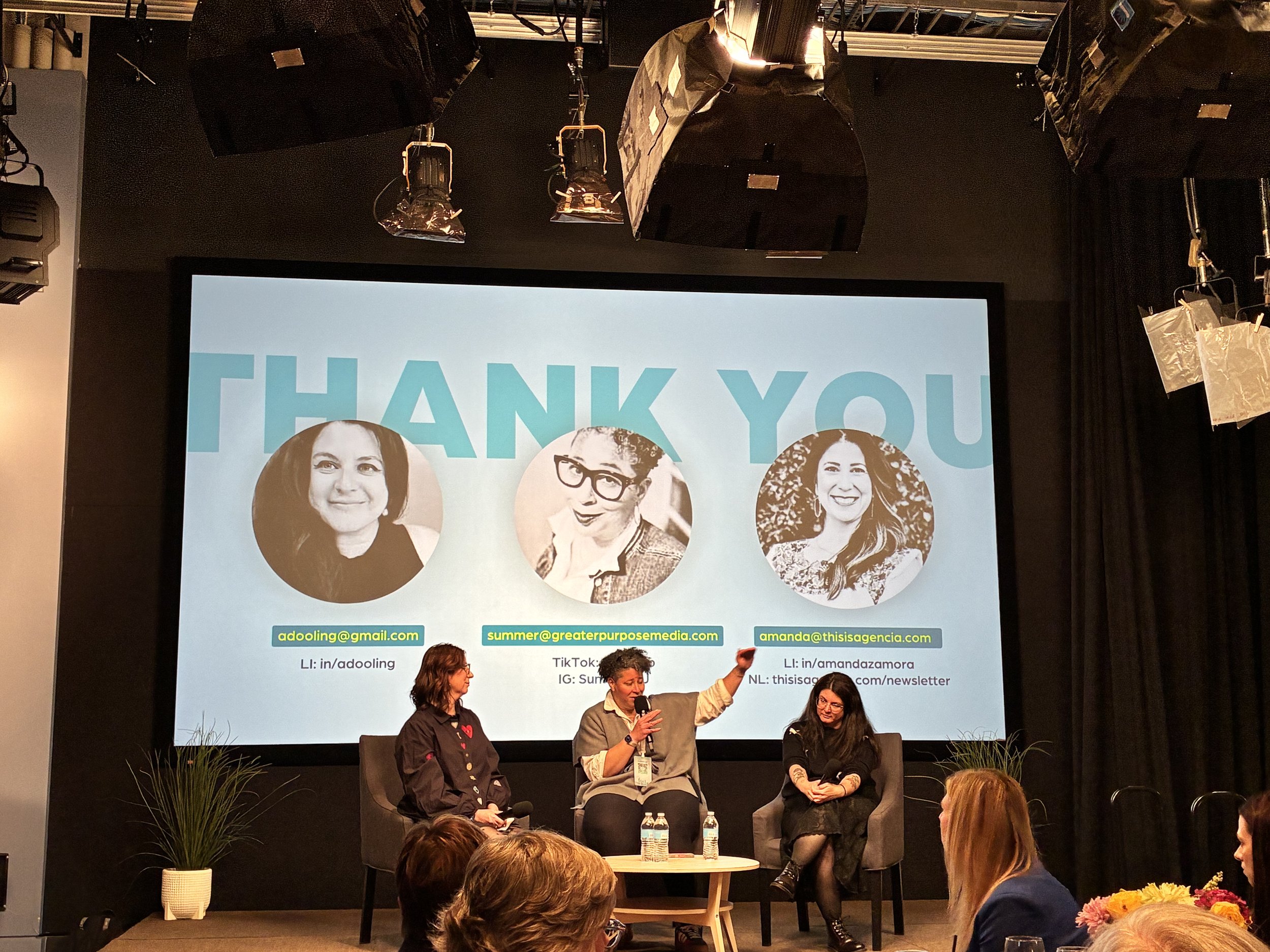
Annemarie Dooling runs The Platia, an independent, Philadelphia-based outlet embedded in mutual aid networks across the city. Summer Nettles is an advocacy journalist and documentary filmmaker behind Greater Purpose Media in Denver. I moderated their conversation at the Collaborative Journalism Summit on May 14.
1. Meet the people before you meet the story.
Distrust in news is at a recorded high — and coverage that reduces communities to incidents, statistics or crises is a significant part of why. The Reuters Institute's 2026 Digital News Report finds that trust in news has fallen to its lowest point since tracking began in 2015, driven in part by audiences who feel journalism happens about them rather than with them. Annemarie described an encampment in South Philly where people were refusing shelter because it meant being split from their dogs and their families — they had been covered in the local press. And they didn't like how they were being portrayed. Annemarie's read on what went wrong:
"I think it would behoove all of us as journalists to go meet the people before we meet the story — to really think about who we're talking about before we just go out and say, here's this crazy story happening over here. But like, who actually are those people?"
2. Ask whether you're helping materially, not just informationally.
The open rate on a newsletter is a metric. An 85% open rate on a newsletter of volunteer opportunities is a signal. There's a difference — one tells you people are opening, the other tells you people needed it. Annemarie didn't set out to build a newsletter. She was doing NARCAN trainings, food distribution and CPR workshops. People started asking her to write things down.
"I think we need to really inspect: if we are here to make people's lives better, if we are here to elevate our communities — are we doing that materially, or are we doing that with articles, and then forgetting them five days later?"
Her words on how the newsletter happened:
"I really thought I had left [writing the news] behind... And people kept asking for things... It shows that I know nothing, and you should always ask your audience what they actually want."
3. In crisis, lower your voice.
More than 4 in 10 people globally say they often or sometimes avoid the news — up from 29% in 2017, according to the Reuters Institute's 2026 Digital News Report — and alarm-driven coverage is a documented driver of that avoidance. Summer spent years in broadcast — radio, local TV, the whole anchor-delivery apparatus. She made a conscious break from it when she shifted to independent journalism.
"I open with 'Hi friends, hi family.' And that's because I am talking to my friends. I am talking to my family... [T]hat stodgy delivery that we've been trained to execute does not reach the hearts of your audience."
And when a story breaks? Communities are wary of journalists showing up to a crisis with camera lights and recorders rolling. Our jobs are bigger than just recording the facts — and more specific than just turning down the volume.
"Our job is to... turn[ down] the volume... Our job is to make that information available to people. It's not to exacerbate the situation."
Summer's framing: be the neighbor with the cup of tea. While the house is on fire, your job isn't to perform the crisis — it's to say here's who to call, here's what comes next. Pressing the panic button leads to freeze, not fight.
4. Your presence is information, too.
Newsrooms have long treated the reporter's identity as something to sideline in service of objectivity. The communities that trust journalism least tend to be the ones that have seen what that posture actually produces — coverage that claims neutrality while centering power.
Summer was the only Black woman at a mayoral briefing on evictions in Denver. That absence — of perspective, of proximity, of accountability — is itself a story. Instead of hiding it, she named it:
"I am the only Black woman here, and I'm here to talk about the fact that Black women in Denver get evicted at twice the rate of white women. I'm here to tell you that the average age of an evictee in the United States is four years old, and that we are evicting 1,200 people a month in Denver. And I'm asking you what you're going to do about it."
Who's in the room — and who isn't — shapes what gets asked, what gets recorded, and what makes it into print. Proximity to a community doesn't compromise your reporting. It's what makes certain reporting possible at all.
5. Engagement is a practice, not a program.
Publishers who invest in direct audience relationships — built through first-party data, community access and distinctive reporting — are better positioned to build loyalty beyond transactional subscriptions. But both Annemarie and Summer pushed back on the idea that community-first journalism requires special infrastructure to get started. Summer's framework was clear:
"Engage, communicate and activate. And that means that you're going to where the community you serve is ... be at the jazz club, be at the poetry slam, be at the father-daughter dance, be at the city council meeting — and then go out with the person who cried because of their frustrations and talk with them. Don't just stay there to ask the council people."
Annemarie's version was just as direct:
"I think about all the time I spent making spreadsheets and sitting at my desk instead of actually humanizing the stories that I was writing... There's people out there living who want to talk to you."
This post is based on a transcript of a conversation during Day 1 of the Collaborative Journalism Summit, Philadelphia, May 14, 2026.
The Audience Almanac: A Seasonal Framework for Intentional Engagement
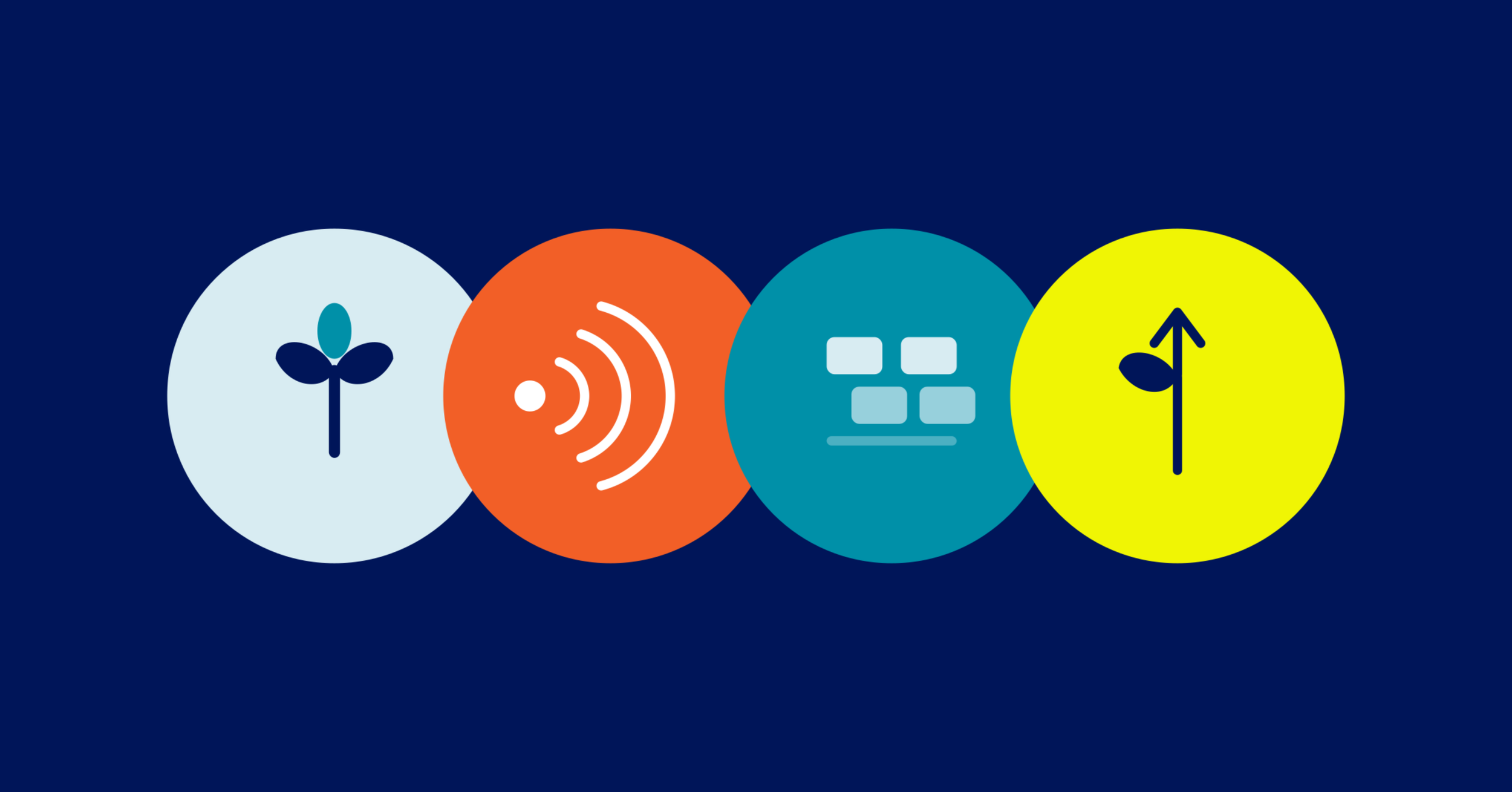
Most news publishers don’t struggle from a lack of good ideas about audience engagement. They struggle from a lack of focus. The Audience Almanac is a seasonal framework that gives community-first publishers a practical structure for doing the right audience work at the right time. Modeled on a farmer’s almanac, the four phases — Define, Listen, Build, and Sustain — map to a repeating cycle that deepens with every pass. Whether you’re just starting out or rebuilding your strategy, this framework tells you what season you’re in — and what to do about it.
A note of gratitude: This framework builds on a growing body of community-first practice, including work by Hearken, the Listening Post Collective and Trusting News — organizations whose thinking on listening and audience-first journalism has shaped this field.
When I moved from the newsroom into ecosystem work, I was coming from having built something from the ground up — with intention.
At The 19th, Emily Ramshaw and I and our founding team had the privilege of naming an audience before we published a single story. We could ask: who, exactly, are we here for? What do they need from us that they can’t get anywhere else? And we could build every decision — editorial, product and revenue — from that foundation.
That experience of building audience-first, intentionally, from day one, underscored something I’ve carried into every consulting engagement since: our internal processes and systems shape the end results for our readers and communities far more than we acknowledge. You can’t separate how you work from who you serve.
When I transitioned into consulting — working across the news ecosystem with publishers with various missions, sizes and models — this theme of alignment emerged again and again. The publishers building audience-first solutions successfully were also taking the time to get their internal systems in shape.
The work feels massive. Where to start?
A growing number of publishers want to center their audiences with greater intention. They know it matters. They’ve heard the research, attended the trainings, crafted the mission statements.
But the work feels massive — and so they try to do everything at once. They broadcast and listen and build community and analyze metrics and plan campaigns all in the same week, never going deep enough in any direction to see results. They feel behind before they’ve started.
What I’ve observed, across publishers large and small, well-resourced and scrappy, is that audience development doesn’t suffer from a shortage of good ideas. It suffers from a shortage of focus.
This framework is my attempt to give publishers permission — and a practical structure — to tackle this work in stretches of focus that are far more doable, and far more impactful.
Enter, the almanac.
An almanac is a farmer’s planning guide — a calendar rooted in natural cycles, built on the understanding that different seasons call for different kinds of work. You don’t plant in winter. You don’t rest in harvest. Each phase has a purpose, and rushing any one of them costs you later.
Audience engagement works the same way. The four seasons of this framework map to four essential phases:
Spring: Define. Summer: Listen. Autumn: Build. Winter: Sustain.
These aren’t sequential steps you complete once. They’re a cycle — one that repeats and deepens with each pass. The goal isn’t to finish the cycle. It’s to know which season you’re in, and to do that season’s work well.
🌱 Spring: Define (Planting the seeds)
The almanac analogy: Farmers don’t plant without knowing their soil and climate. They select seeds intentionally, for their specific conditions.
The Define phase is about getting specific. Not just “we serve our community” but: which community members, what they need, and why your outlet is positioned to serve them better than anyone else.
Publishers who skip this phase — who jump straight to content production or community-building — often find themselves months down the road wondering why their engagement isn’t growing. The answer is almost always rooted here: the audience was never clearly named.
Key activities in Spring:
Define your target audience with specificity — demographics, lived experience and information needs, and what they’re NOT getting elsewhere.
Set clear engagement goals. What does success look like in six months? In a year?
Establish your KPIs — but choose metrics that reflect civic impact, not just reach. Open rates and pageviews matter, but so do community trust signals.
Develop a communication strategy: what channels, what voice, what cadence?
Key question: If you described your most important reader to a colleague, could they pick her out of a crowd?
☀️ Summer: Listen (Tending the crops)
The almanac analogy: Summer is active tending — monitoring, watering, protecting. Farmers don’t plant and walk away. They pay close attention.
The Listen phase is about building real feedback loops — not just monitoring metrics, but hearing from your audience directly. This is where a lot of publishers underinvest. They track traffic but don’t ask readers what’s missing. They watch open rates but never text a subscriber to ask what story they wish existed.
Some of the most effective listening practices I’ve seen are also the simplest. The 19th asks every new subscriber: How did you hear about us? What stories are missing from the news? Those answers offer insights in ways an analytics dashboard simply can’t.
Key activities in Summer:
Monitor social media for what your audience says about your coverage — not just engagement metrics, but sentiment and gaps.
Analyze website behavior with curiosity, not just performance pressure. What are readers looking for that they’re not finding?
Run short surveys or reader polls — even a single question sent monthly builds a habit of feedback.
Show up in the spaces where your audience already gathers: WhatsApp groups, community events, local Facebook groups.
Read your support tickets, your reply-to emails, your DMs. These are reader dispatches. Treat them as such.
Key question: When did you last hear something from a reader that surprised you?
🍂 Autumn: Build (The harvest)
The almanac analogy: Autumn is the harvest — the fruits of intentional planting and careful tending. The work here is collecting, sharing and distributing.
The Build phase is where publishers often spend most of their energy — creating content, responding to readers, running events — but without the grounding of Spring and Summer, they're building about their audience, not with them.
When you've done the Define and Listen work first, that changes. You're not guessing at what your audience needs. You're building from what they've already told you.
Key activities in Autumn:
Create content that is directly responsive to what you heard in Summer — and tell your readers that’s what you’re doing. Closing the loop builds trust.
Respond to audience feedback visibly and specifically. Not just “thanks for your input” but “you told us X, so we did Y.”
Build community infrastructure: newsletters, events, WhatsApp channels and membership programs — whatever fits your model and your audience’s habits.
Invest in your customer service and reader experience. The way someone feels when they reach out to you shapes whether they stay.
Key question: Are you building about your audience, or with them?
❄️ Winter: Sustain (Rest and prepare)
The almanac analogy: Winter is for resting, analyzing the harvest and maintaining tools, and planning the next planting season. It’s strategic — not idle.
This is the phase most publishers skip, or feel guilty about. But Winter is what makes the next cycle better. It’s where you step back from execution and ask: what did we learn?
I’ve seen publishers run excellent audience-building programs and then immediately pivot to the next campaign without pausing to analyze what worked, what didn’t, and why. That institutional knowledge evaporates. The next cycle starts from scratch instead of from strength.
Key activities in Winter:
Audit your engagement metrics from the past cycle — not just what performed, but what it signals about your audience’s evolving needs.
Update your audience definition and your KPIs based on what you learned. Your audience is not static; your understanding of them shouldn’t be either.
Maintain relationships with key community members even when you’re not in active campaign mode. Sustain, don’t just sprint.
Evaluate your tools and platforms. Is your tech stack serving your audience strategy, or constraining it?
Draft your roadmap for the next cycle. Spring comes whether you’re ready or not.
Key question: What would you do differently next cycle — and have you actually written it down?
What season is your newsroom in right now?
Before you start planning your next audience initiative, take five minutes with these questions:
On Define: Can you describe your primary audience in two specific sentences — not in mission statement terms, but as actual people who have problems to solve?
On Listen: In the past 30 days, have you received direct, qualitative feedback from readers — not traffic data, but actual voices?
On Build: Is your most recent content initiative directly traceable to something your audience told you they needed?
On Sustain: When did you last formally review your audience strategy and update it based on what you’ve learned?
The big one: Which phase are you currently neglecting — and what’s one thing you could do this week to tend to it?
There are no wrong answers here. The goal is clarity about where you are in the cycle — so you can do that season’s work with focus, instead of trying to do every season at once.
One more thing.
The almanac isn’t a prescription. It’s a permission structure.
Permission to stop trying to be everything to everyone, all at once. Permission to go deep in one direction before moving to the next. Permission to rest and reflect without feeling like you’re falling behind.
The publishers I’ve seen build the most durable audience relationships aren’t the ones with the biggest budgets or the most sophisticated tech stacks. They’re the ones who know their audience with specificity, listen to them consistently, build in genuine response to what they hear, and return to the beginning of the cycle, curious about what they still don’t know.
The almanac is a place to start. What season are you in?
—
This framework is featured in the April edition of the Audience Almanac newsletter. Subscribe at thisisagencia.com/newsletter.

The Business Case for WhatsApp-First Publishing
Meet Pamplonews founder Juan Andrés Muñoz, who’s building a local newsroom inside WhatsApp — and charting the path to monetizing messaging.

Juan Andrés Muñoz launched Pamplonews in 2022 to fill the gap in local, independent coverage of Pamplona. The hyperlocal newsroom centers everyday life, public services and civic power in the city’s neighborhoods.
Meet Pamplonews founder Juan Andrés Muñoz, who’s building a local newsroom inside WhatsApp — and charting the path to monetizing messaging
AGENCIA: What problem were you trying to solve when you first launched Pamplonews as a WhatsApp-first product?
JUAN ANDRÉS: The problem wasn't a lack of news outlets. Pamplona actually has several. The problem was that none of them were built for how people actually want to consume local news today. Existing outlets were either politically divisive, wrote in stiff "journalism jargon" that felt distant and artificial, or failed to focus on what people genuinely need. I wanted to create something different: a news source that prioritized utility over ideology, connection over division, and clarity over complexity. No performative outrage, no complicated prose trying to sound Important: just straightforward, conversational reporting on things that actually matter to daily life in Pamplona.
WhatsApp was the perfect medium for that vision because it's inherently conversational and intimate. The platform itself demanded a more human tone. You can't write in pompous newspaper-speak when you're appearing right next to someone's chat with their mom. WhatsApp forced us to be clear, concise, and genuinely useful, because if we weren't, people would just mute us. That constraint made the content better and more focused on what the community actually needed.
A: Why did WhatsApp feel like the right place to solve that problem, especially for a Spanish-language audience?
JA: In Spain, WhatsApp it’s not an app people use: it's the app. Everyone from teenagers to grandparents has it, checks it constantly, and trusts it for important information. Unlike in the U.S. where messaging is fragmented across iMessage, SMS, and various platforms, Spain is a WhatsApp monoculture with over 90% penetration. For local news, that universality is everything. I didn't need to convince anyone to download something new or check another website.
Spanish communication culture is inherently social and immediate. People share news through WhatsApp groups with family and friends constantly. By publishing there directly, we were plugging straight into how information already flows.
And this is not theory, we have proved it time and again. We have built several web apps that work well initially when we promote them, but then they lose steam because they are not as sticky as WhatsApp is. So our approach now is always “Think WhatsApp first… and only”.
A: Many U.S. publishers still treat WhatsApp as experimental. What do you think they misunderstand most about the platform?
JA: They misunderstand that WhatsApp isn't social media: it's infrastructure. U.S. publishers keep waiting for WhatsApp to "prove itself" the way they waited on Twitter or TikTok, but that's the wrong mental model.
WhatsApp is closer to SMS or email: it's how people actually communicate every single day, not a platform they visit when they're bored.
The biggest mistake is treating it like a nice-to-have distribution experiment instead of a primary communication channel. American publishers are so focused on building apps, optimizing for Google, and chasing social algorithms that they're overlooking the fact that their audience is already on WhatsApp, checking it 20+ times a day, and would gladly receive news there if someone just showed up consistently.
A: Can you walk us through how your WhatsApp setup works at scale, especially using communities instead of groups or channels?
JA: We chose WhatsApp Communities very deliberately because they offer the best balance between privacy, intimacy, and scalability. Let me break down why we didn't go with the other options:
Why not Groups? WhatsApp Groups expose everyone's phone numbers to all members, which is a non-starter for privacy and GDPR compliance. You're also capped at 1,024 members, which severely limits growth potential.
Why not Channels? Channels solve the scale and privacy problems (unlimited subscribers, no exposed phone numbers) but they're impersonal and hidden away in a separate Updates tab. That isolation is the problem. People don't check the Updates tab with the same frequency or urgency as their main chat list. Channels feel like broadcast media, not community conversation. We lose the intimacy and the prime real estate of appearing directly among someone's personal conversations.
Why Communities work for us: They give us privacy without sacrificing presence. Subscribers don't see each other's phone numbers, but our newsletter still appears in their main chat interface alongside their personal conversations. That positioning is everything. When someone opens WhatsApp to check a message from a friend, they see our daily bulletin right there. We're part of their daily communication rhythm, not buried in a secondary tab they might check once a week. The CMS we built handles scheduling, content formatting, and distribution across these groups automatically. We draft once, preview how it'll look on mobile, schedule the send time, and the system handles delivery. Subscribers can mute notifications if they want to read on their own schedule, but the message is always waiting in their main chat list.
A: How does your system handle scheduling, analytics and content management compared to email-first platforms like Substack or Beehiiv?
JA: We actually studied platforms like Beehiiv pretty extensively: their editing workflow, analytics dashboards, and content management logic and used that as our north star when building our WhatsApp CMS. The goal was to create a similar level of functionality, but built for WhatsApp's unique constraints and opportunities rather than just adapting email tools.
Our CMS handles scheduling so we can queue up daily newsletters in advance and maintain our consistent send time without manual intervention. The content editor is optimized for WhatsApp's format and markdown. We can draft, preview exactly how messages will appear on mobile, and publish with one click.
On the analytics side, we track delivery rates, read receipts (where available), link click-throughs and subscriber growth/churn. The system we built is lean, robust, and serves our needs beautifully. Could it do everything Beehiiv does? No. But it does everything a WhatsApp publisher actually needs.
A: What was the first WhatsApp monetization approach that actually worked for you, and what failed before that?
JA: The first thing that actually worked was partnerships with event organizers. Local cultural events, concerts, exhibitions, festivals… these were natural fits for our audience because Pamplona has such a strong events calendar, and people genuinely wanted to know what was happening each weekend. Event organizers needed reach, and we had a highly engaged local audience checking their phones daily. It was a clean exchange of value.
What failed before that? My expectations. I came in assuming I could command higher CPMs or charge rates comparable to what larger digital publishers were getting. The reality is that local businesses are really struggling financially and they did not understand the value of WhatsApp as a distribution channel because they were too used to the local radio, local newspaper, or their own Instagram accounts. I had to lower my expectations and adjust to what the market was willing to pay, and it was a bit frustrating.
A: For publishers just starting out, what’s a realistic first monetization goal on WhatsApp?
JA: Your first immediate goal shouldn't be direct monetization. I think it should be proving subscriber value and building retention. WhatsApp is a trust-based medium where people let you into their most personal communication space. If you push sponsorships or other monetization strategies before establishing that relationship, you'll lose subscribers faster than you gain them.
Spend your first 6-12 months aiming for 500-1,000 engaged local subscribers, tracking click-through rates, and demonstrating that WhatsApp is a viable distribution channel worth investing in. Once you've built that foundation, indirect monetization is your lowest-hanging fruit via local business partnerships for sponsored posts and events promotion, with a realistic first-year goal of 500-1,500 usd/month from these indirect revenue streams, enough to cover costs and prove the business model has legs.
A: Any publisher building on WhatsApp is ultimately dependent on Meta. How do you think about that risk and do you have contingency plans in place?
JA: Platform dependency is a real risk and I'd be naive to ignore it. Meta can change policies or sunset features with little warning. Those shifts could potentially change how we operate on the platform overnight. That said, I think about this risk differently than I would with algorithmic platforms like Facebook or Instagram. WhatsApp is fundamentally a direct communication channel: I own the relationship with my subscribers in a way I don't on social media. There's no algorithm deciding whether my audience sees my message. The dependency is on the infrastructure, not on Meta's favor or reach.
Internally we have considered different scenarios if things would change. One of our contingency plans is reverting to email, which is probably the most resilient, platform-independent channel we have as publishers. If WhatsApp disappeared tomorrow, we would lose immediacy and convenience, but we wouldn't lose our entire audience.
But honestly, I would lose one big incentive to do what I do. The reality is that every digital distribution channel involves platform dependency. For us, WhatsApp's risk is acceptable because the platform has 2+ billion users globally and deep penetration in Spain. It's not going anywhere soon. Besides, the direct-messaging model is inherently less fragile than algorithmic discovery.
A: What kinds of content consistently drive the highest engagement on WhatsApp, and how do you balance staying present without overwhelming subscribers?
JA: The content that drives the highest engagement for us is hyper-local and genuinely useful to daily life: housing updates (especially subsidized housing opportunities and application deadlines); job postings and employment opportunities; discounts and sweepstakes; food and gastronomy (In Navarra, food isn't just a topic, it's practically a religion)
We're disciplined about volume. We send one message per day, Monday through Friday, with each newsletter capped at roughly 5,000 characters. This constraint forces us to be ruthlessly editorial, only the most relevant stories and events make the cut, which means subscribers trust that when we show up in their inbox, it's worth reading. On Fridays, we send a weekend edition too that's more event-oriented and leisure-focused: things to do, cultural events.
A: What excites you most about WhatsApp’s future for news publishers in the next 1–2 years? How can small or mid-size U.S. newsrooms start piloting this now?
JA: What excites me most is that WhatsApp is finally being recognized as a primary distribution channel rather than just a social media afterthought and we should see more innovation in the space. I've seen firsthand that people check their messaging apps multiple times a day, far more consistently than they open news apps or visit websites. The platform's nearly universal adoption means you're meeting audiences where they already are, not asking them to download yet another app or remember another URL.
For small or mid-size U.S. newsrooms who want to pilot this model, I would start small and focused. These are some pointers based on my experience:
Choose one beat or newsletter to pilot: pick your strongest vertical and create a dedicated community for it
Promote the WhatsApp community where your audience already is: make it a one-click subscribe. The friction is minimal.
Start posting just once a day, and provide a CLEAR VALUE: write like you talk to a friend. Keep messages concise but packed with information and action-oriented.
Track your metrics: track every link you share so you can measure which stories drive interest and guide your editorial efforts..
The beautiful thing about WhatsApp is that it requires almost no budget to start. For small newsrooms stretched thin, that's a massive built-in audience. You're essentially inserting your newsroom into people's daily communication habits, and that's where sustainable audience relationships are built.
A: If you could have only one app on your phone - what would it be and why?
JA: Besides the Phone app itself, I'd have to say WhatsApp (Agencia : 😆), not just because it's my primary tool for Pamplonews, but because it's become the communication backbone for my entire work and personal life.
That said, if I'm being honest about what I actually use obsessively: it's a tie between Inoreader and Raindrop.io. Inoreader is my newsroom in my pocket. Raindrop.io is where I save and organize everything. Together, they're essentially my external brain for content creation.
A: If you could capture 2026 (so far) in a song, what would it be?
JA: "The Promise" by When in Rome. Partly because I recently attended a special 20th anniversary screening of "Napoleon Dynamite" with my oldest daughter and the cast, and hearing that song again in that context hit differently.
But beyond the nostalgia, there's something about its optimistic, forward-moving energy that perfectly captures where I am with Pamplonews this year. It's a song about commitment and momentum, about showing up and delivering on what you've promised.
A: How can publishers work with you?
JA: I can help media organizations develop and optimize their WhatsApp content distribution strategy. Drawing from my hands-on experience building Pamplonews' audience through WhatsApp, I guide publishers on best practices for audience engagement, content formats, automation workflows and growth tactics specific to the platform.
Publishers can also leverage the custom CMS we've built specifically for WhatsApp newsletter management. This system streamlines the entire process — from content creation/edition and scheduling to distribution and performance tracking — making it easier for newsrooms to maintain consistent, high-quality WhatsApp communications without the technical overhead and the burden of manually sending your messages.
Get in touch with Juan Andrés »
This Q&A was edited by Daniela Tabata.
How are you building capacity for community-first publishers? We want to feature your work. Drop us a line.

Congratulations to the Latino Media Consortium, a Press Forward grantee 🎉
I am beyond excited to share that Press Forward has awarded the Latino Media Consortium a $750,000 grant—an important show of support for independent, community-first media at a critical time for Latino audiences.
I am beyond excited to share that Press Forward has awarded the Latino Media Consortium a $750,000 grant—an important show of support for independent, community-first media at a critical time for Latino audiences. Read more from LMC:
The Latino Media Consortium (LMC) is deeply proud to be a recipient of a $750,000 infrastructure grant from Press Forward, a national philanthropic initiative dedicated to revitalizing local news. LMC is one of just 22 organizations funded in Press Forward’s most recent Open Call, a $22.7 million commitment designed to strengthen the backbone of the news ecosystem nationwide. For us, this investment is more than a financial milestone - it’s a vote of confidence that Latino‑focused newsrooms belong at the center of America’s information future.
I co-founded LMC with Lucy Flores in 2024 as I was also building this consultancy, Agencia Media, to equip publishers and community organizations with the tools they need to center and serve diverse audiences in a tumultuous media age. With the support of Press Forward, LMC will now become a central focus of Agencia’s work supporting the publishers who serve the nation’s 65 million Latinos.
Over the next two years, I will be leading LMC’s capacity-building efforts for member publishers, helping them tackle operational hurdles to unlock growth and sustainability. Our capacity-building services will be coupled with direct investment, combining funding with coaching so every lesson can lead to real growth. And just as our publishers employ a community-first approach, so will we: we listen first, then help translate data into actionable solutions.
Join Us: Call for Consultants & Coaching Partners
If you’re a consultant or coach with experience in audience development (especially Latine and bilingual audiences), business modeling, newsroom operations, or revenue innovation—and if you care deeply about the future of Latino media—I’d love to hear from you.
Please complete this brief form and tell us about how you can help. There’s never been a more important time to come together to ensure Latino communities have the news they need and deserve.
Thank you!
Amanda